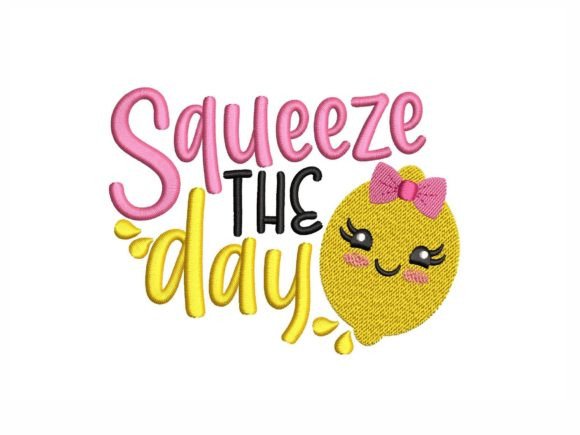
Squeeze the Day Lemon: A Designer’s Practical Review
As an embroidery designer who has spent countless hours digitizing and stitching out thousands of designs, I have learned that a cute concept does not always translate to a clean finished product. When I first loaded the Squeeze the Day Lemon machine embroidery design into my software, I was immediately drawn to its playful energy. It is not just another generic fruit motif; it carries a personality that fits perfectly into the current trend of whimsical, hand-lettered aesthetics. For those of us in the craft business, finding a design that balances visual charm with technical stitchability is rare. This review breaks down how this specific Food-themed Embroidery asset performs in real-world applications, from boutique apparel to home decor.
First Impressions and Visual Mood
The immediate appeal of Squeeze the Day Lemon lies in its layout. The typography is bold enough to be legible from a distance, yet it retains a hand-drawn quality that prevents it from looking too rigid or corporate. The lemon graphic acts as a visual anchor, providing a pop of color that draws the eye before the viewer even reads the quote. In terms of mood, it exudes optimism and freshness. This makes it an ideal candidate for spring collections, summer giveaways, or any project aiming to evoke a sense of joy. For an Etsy seller or small shop owner, this emotional connection is crucial. Customers are not just buying a stitched item; they are buying a feeling. This design delivers that feeling without relying on overly complex details that might compromise durability.
Real-World Application: The Tote Bag Test
To truly evaluate a design, you must imagine it on a tangible product. I recently considered using Squeeze the Day Lemon for a custom order of canvas tote bags for a local farmer’s market vendor. The client wanted something cheerful that would stand out against the natural beige of the cotton canvas. The design performed exceptionally well in this context. The curvature of the lemon complemented the rectangular shape of the bag, creating a balanced composition. Because the design includes both text and a graphic element, it fills the space adequately without looking sparse. For a handmade product intended for daily use, the visual weight of the design ensures it does not get lost in the texture of the fabric. It transforms a simple utility item into a statement piece, increasing the perceived value of the finished product.
Performance on Apparel and Textiles
When moving from home decor to custom apparel, such as sweatshirt embroidery or t-shirt designs, the technical aspects of the file become critical. I tested the design on a medium-weight cotton blend, which is standard for most casual wear. The stitch density appeared moderate, which is a positive sign. Overly dense designs can cause puckering, especially on stretchy fabrics, while too little density can look cheap and allow the fabric to show through. Squeeze the Day Lemon seems to strike a good balance. The satin stitch used for the lettering provides a smooth, glossy finish that contrasts nicely with the matte texture of the fabric. However, designers should note that the lemon graphic likely utilizes fill stitch techniques. On thinner fabrics, this area may require a cut-away stabilizer to prevent distortion during washing. For baby embroidery projects, where softness is paramount, testing on scrap fabric with a soft backing is essential to ensure the back of the design does not irritate sensitive skin.
Considerations for Challenging Surfaces
Not every surface is forgiving. If you plan to use this design on an embroidered patch or a cap, you must consider the curvature and stability of the base material. Caps, in particular, are tricky due to their curved surface and multiple seams. While the design is not excessively wide, placing it on the front panel of a cap requires careful hooping. The text must remain horizontal relative to the brim, which might require adjusting the placement manually in your embroidery software. Additionally, for dark fabric backgrounds, the thread colors chosen for the lemon and text must have high contrast. A bright yellow for the lemon and white or light pastel for the text will ensure readability. Without proper contrast, the design loses its impact, and the effort put into the commercial embroidery project goes unnoticed.
Enhancing Brand Consistency and Value
For creative entrepreneurs and digital product sellers, consistency is key to building trust. Squeeze the Day Lemon offers a versatile aesthetic that can fit into various brand identities, from rustic farmhouse to modern minimalist. Using this design in a cohesive collection—perhaps paired with other citrus-themed motifs or complementary typography—can help establish a recognizable style for your small shop product line. When customers see a well-executed, professional-looking design, their confidence in your brand increases. This design supports that professionalism by avoiding common pitfalls like jagged edges or poorly connected letters. It looks intentional and polished, which justifies a higher price point for personalized gifts or boutique branding items.
Practical Notes for Designers and Makers
Before committing to a large production run or listing this as a new item in your store, there are several practical steps you should take. First, always check the specific embroidery file formats included to ensure compatibility with your machine. While the description mentions multiple files, verifying that your preferred format is present saves time and frustration. Second, conduct a test stitch on a similar fabric to your final product. Pay attention to the stitch density in the lemon area. If it appears too thick, consider using a lighter weight thread or adjusting the tension. Third, review the licensing terms. If you are an Etsy seller planning to sell finished items, confirm that the license allows for commercial use. Some digital embroidery files are for personal use only, so clarity here is vital to avoid legal issues.
- Test on Scrap Fabric: Always run a test on the actual material you intend to use to check for puckering or thread breaks.
- Check Thread Contrast: Ensure your thread colors stand out against the fabric background, especially for the text elements.
- Verify Hoop Size: Confirm the design fits comfortably within your hoop, leaving enough margin for secure hooping.
- Inspect Small Details: Zoom in on the digital preview to check for any tiny, isolated stitches that might cause nesting or breakage.
- Review Licensing: Clarify whether the design permits commercial sales of finished products or if it is restricted to personal use.
Final Verdict for Craft Businesses
In the competitive world of handmade goods, having reliable, attractive design assets is half the battle. Squeeze the Day Lemon proves to be a strong contender for anyone looking to add a touch of whimsy to their portfolio. It is versatile enough for holiday embroidery, everyday apparel, and home accessories. Its strength lies in its simplicity and emotional resonance. By following best practices for stabilizer selection and thread choice, you can produce a high-quality finished product that delights customers and enhances your brand reputation. Whether you are creating a unique personalized gift or stocking your online store with fresh inventory, this design offers the practical reliability and visual appeal necessary for success in the modern craft market.