Vintage Rose: A Designer’s Review of This Redwork Classic
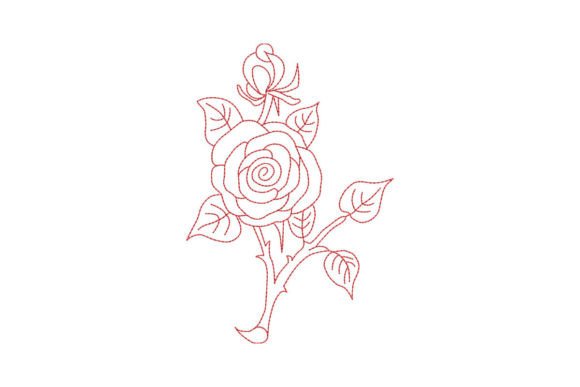
As a designer who has spent countless hours digitizing and testing embroidery patterns, I have learned that simplicity is often the hardest quality to master. When I first loaded the Vintage Rose file into my software, I was not looking for complexity. I was looking for clarity. In the world of Outline Flowers, a design lives or dies by its line weight and flow. This particular piece, described as a hand-drawn cute vintage rose on the stem with leaves and a bud, promised a specific aesthetic: understated, timeless, and versatile. After putting it through a series of real-world tests on various fabrics and hoop sizes, I am ready to share my practical assessment for fellow Etsy sellers, crafters, and apparel decorators.
First Impressions: Mood and Visual Personality
The immediate appeal of Vintage Rose lies in its "redwork" style. For those unfamiliar, redwork traditionally uses a single color thread, often red, on white fabric, relying entirely on the stitch path rather than color blending to create depth. This design captures that spirit perfectly. It is a line art flower, meaning it uses continuous paths rather than dense fill areas. The mood is nostalgic yet fresh. It does not scream for attention; instead, it invites a closer look. The inclusion of the bud and leaves adds a necessary organic balance to the main bloom, preventing the composition from feeling top-heavy or static.
For a craft business owner, this visual personality is a asset. It fits seamlessly into the current trend of minimalist home decor and slow fashion. It feels handmade, even when produced by a machine, because the line work mimics the imperfection and charm of hand stitching. This is crucial for building customer trust in handmade products. Buyers can instantly recognize the care in the design without being overwhelmed by excessive detail.
Real-World Application: From Tote Bags to Sweatshirts
To truly evaluate an embroidery file, you must imagine it on a finished product. I started by testing Vintage Rose on a canvas tote bag. This is a classic use case. The sturdy texture of canvas holds the stitches well, and the single-color approach keeps production costs low while maximizing visual impact. The design sat beautifully on the corner of the bag, acting as a subtle brand marker or decorative accent.
Next, I moved to apparel. On a heavyweight cotton sweatshirt, the design performed exceptionally well. The sweatshirt embroidery market is saturated with large, dense logos, so a delicate line art flower offers a refreshing alternative. It works particularly well for custom apparel aimed at a younger demographic or those preferring understated style. I also tested it on a baby onesie. Here, the lack of dense fill stitch areas is a major advantage. Dense stitching can make baby clothes stiff and uncomfortable against sensitive skin. Vintage Rose, using primarily running stitch techniques, remains soft and flexible, making it ideal for baby embroidery projects.
For holiday embroidery or gift items, this design shines on kitchen towels and aprons. Imagine a set of white linen tea towels with this rose stitched in deep crimson or forest green. It elevates a simple household item into a thoughtful personalized gift. The versatility allows it to transition from a spring motif to a winter holiday accent simply by changing the thread color.
Technical Considerations and Stitching Clarity
While the design is forgiving, it is not without technical requirements. Because it relies on line art, the stitch density must be precise. If the density is too low, the fabric may show through the gaps, breaking the illusion of a continuous line. If it is too high, the fabric may pucker. In my tests, using a cut-away stabilizer provided the best results for stretchy fabrics like jersey knits, while a tear-away stabilizer worked fine for stable wovens like cotton or linen.
One critical factor is thread colors. Since this is a one-color design, the contrast between the thread and the fabric is paramount. On white or light pastel fabrics, dark threads like navy, black, or traditional red create sharp definition. However, on dark fabrics, you must ensure your machine tension is perfect to prevent the bobbin thread from showing, which can ruin the clean look of the line art. I recommend testing on scrap fabric first to dial in your tension settings.
Regarding hoop size, this design is compact. It fits easily into standard 4x4 or 5x7 hoops, leaving ample room for monograms or additional text if you are creating a small shop product. This flexibility is valuable for digital embroidery file sellers who want to offer multi-size packs. However, if you plan to scale it up significantly for a large tote bag design or blanket, be cautious. Enlarging line art can sometimes reveal jagged edges in the stitch path if the original digitizing was not optimized for larger scales.
Where to Use Caution
Not every project is a good fit. I would advise against using Vintage Rose on highly textured fabrics like thick wool coats or fuzzy fleece without extensive testing. The fine lines of the leaves and stem can get lost in the pile of the fabric. Similarly, on very thin, slippery fabrics like silk or rayon, the running stitches may pull or distort the material unless a high-quality stabilizer is used.
Also, consider the end-use. If the item will undergo frequent, harsh washing, such as a child’s play shirt, ensure you use high-quality polyester thread that resists fading and breaking. While the design is durable, the longevity of the finished product depends heavily on material choices.
Commercial Value and Brand Consistency
For commercial embroidery and Etsy sellers, consistency is key. Vintage Rose offers a cohesive look that can become part of your brand identity. Using the same design style across different products—patches, shirts, and home goods—creates a recognizable aesthetic. It serves as excellent design assets for your portfolio. When creating printable mockup previews for your online store, this design photographs well because of its high contrast and clean lines.
Before selling any embroidered patch or garment featuring this design, always confirm the licensing terms. Ensure that the machine embroidery design license allows for commercial use of finished physical items. Most designers allow this, but it is vital to check specifically if digital resale is prohibited.
Final Verdict
Vintage Rose is a solid addition to any designer’s library. It is not just a pretty picture; it is a functional, well-digitized tool for creating marketable goods. Its strength lies in its adaptability and timeless appeal. Whether you are making a holiday gift for a friend or stocking your boutique with custom apparel, this design delivers professional results with minimal fuss. Just remember to respect the simplicity of the line work by choosing the right fabric and thread combination. Happy stitching.